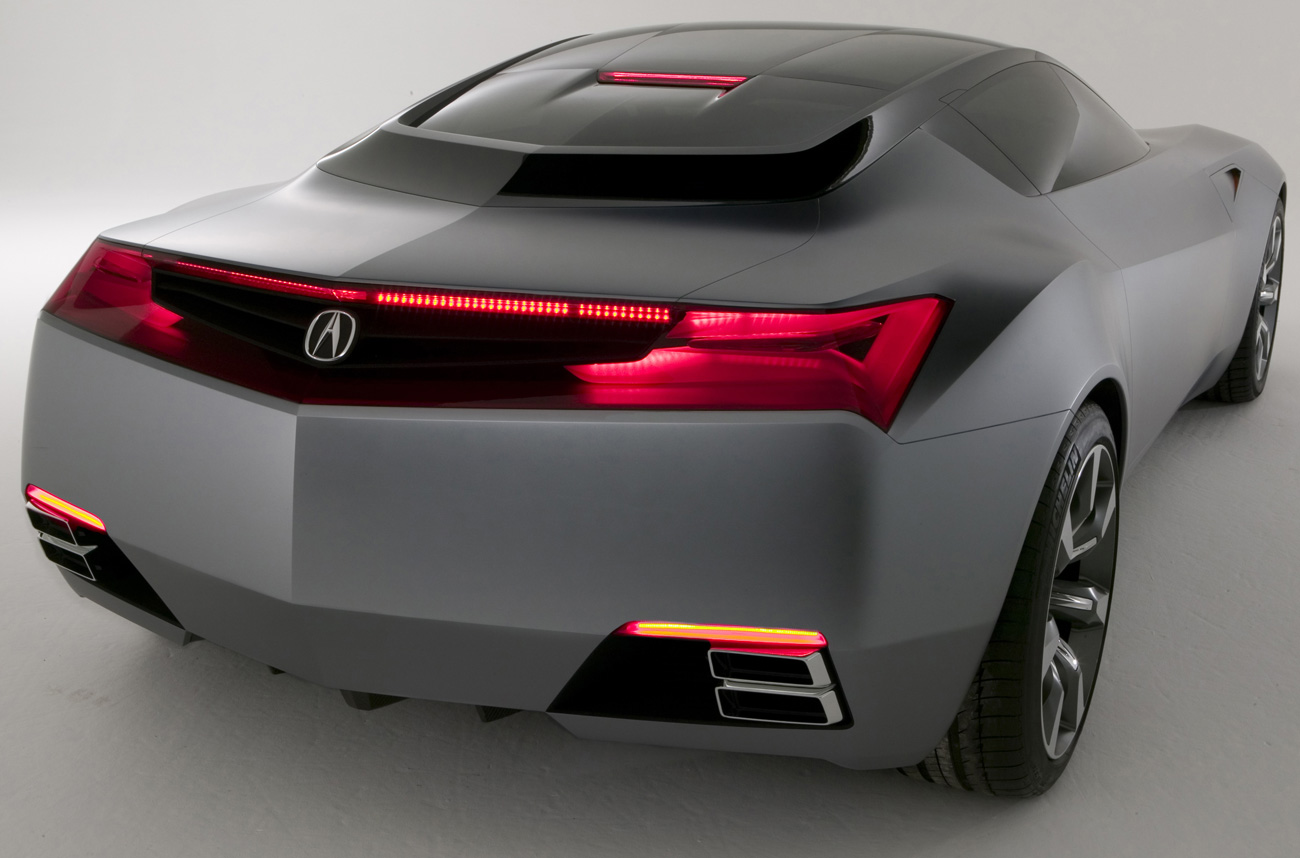
What Is Eco Power?

EcoPower Fuel Energizer is a revolutionary magnetic device that is scientifically designed using advanced technology which break and realign the hydrocarbon chains when the fuel passing through the fuel line of your vehicle, The magnetic field created by ecoPower Fuel Energizer ionizes the fuel being fed to the engine, which itself produce more complete combustion, achieving maximized of fuel economy {more mileage per gallon}, increase power output and at the same time reduce harmful emissions.

WORKING MECHANISM IONIZATION PROCESS

Most fuels for internal combustion engines are liquid and will not combust easily till they are vaporized and mixed with air. Most emissions from motor vehicles consist of unburned hydrocarbon, carbon monoxide, and oxides of nitrogen. Unburned hydrocarbon and oxides of nitrogen react in the atmosphere and create smog.

Fuel mainly consists of hydrocarbons. These groupings of hydrocarbons, when flowing through a magnetic field, change their orientations of magnetization in a direction opposite to that of the magnetic field and at the same time intermolecular force is considerably reduced or depressed. These will help to disperse oil particles and to become finely divided. In addition, hydrogen ions in fuel and oxygen ions in air or steam are magnetized to form magnetic domains which will assist in atomizing fuel into finer particles.

FEATURES AND BENIFITS 25% OF FEUL SAVING AND MORE

Guaranteed mileage improvement Protects and prolongs engine parts Smoother engine operation (Less vibration & noise- the most immediate sensation) Rapid payback Improves power and torque Reduced visible black smog & toxic gas emission Easy installation without tools (DIY) Works on diesel and petrol No modification of fuel line

Intrested to Order Pls email to matcargo@gmail.com Eco Power Feul Saver 1 Set RM 168.00 / USD 47.90

Tuesday, June 2, 2009

Don't On Your Aircond When Starting Your Car


Please note and circulate...

Do not turn on A/C immediately as soon as you enter the car!


Please open the windows after you enter your car and do not turn ON the 

air-conditioning immediately. According to a research done, the car dashboard,  

sofa, air freshener emits Benzene, a Cancer causing toxin (carcinogen- take note 
of the heated plastic smell in your car). In addition to causing cancer, it poisons 
your bones, causes anemia, and reduces white blood cells. Prolonged exposure
will cause Leukemia, increasing the risk of cancer may also cause miscarriage.  


Acceptable Benzene level indoors is 50 mg per sq. ft. A car parked indoors with 

the windows closed will contain 400-800 mg of Benzene. If parked outdoors 
under the sun at a temperature above 60 degrees F, the Benzene level goes up 
to 2000-4000 mg, 40 times the acceptable level... & the people inside the car will 
inevitably inhale an excess amount of the toxins. 


It is recommended that you open the windows and door to give time for
 
the interior to air out before you enter. Benzene is a toxin that affects your 
kidney and liver, and is very difficult for your body to expel this toxic stuff.


Tuesday, March 10, 2009

Fuel Technologies in Automobiles

Most of the cars in the world are run by internal combustion engines using gasoline or diesel fuels for propulsion. However, there is massive concern regarding the air pollution caused by the usage of such vehicles hence alternative fuel technologies are being looked into. Other factors that might lead to its decline are the increasing prices of oil-based products and stricter environmental laws. Global warming is finally being recognized as a global issue hence the emission of the greenhouse gases by these automobiles has to be looked into. Other than gasoline and diesel, petroleum products such as Liquefied Petroleum Gas (LPG) and Compressed Natural Gas (CNG) are also used in some internal combustion engines.
Diesel was first used as a fuel in automobiles in the 1930s, introduced by Mercedes Benz and Citroen. Diesel has much higher fuel burn efficiency as compared to petrol. However, they require better filters to handle exhaust gases of fine soot particles which are called diesel particulate matter. Cars that run on gasoline are generally lighter and can work at higher rotational speeds. Sports cars are normally fitted with gasoline engines due to this reason. A catalytic converter may be used to clean up exhaust gases released. Biofuels are also used in some automobiles to increase octane, improve emissions or simply as an alternative to petroleum fuels. Ethanol is used popularly as fuel in Brazil; it caters to almost 20% of the automotive fuel need of the nation.
Electric cars and stream driven engines were produced way before gas powered engines. Steam powered engines could not run until the boiler pressure was available; additionally they tended to be very heavy so they never achieved mass popularity as a road vehicle. Initially, the electric cars had an advantage as they were silent as compared to the loud gas powered engines, a problem which was later rectified. However, there are many reasons which led to their downfall. The batteries of these cards needed to be recharged regularly so they were not fit to travel on for a long range. The extra weight these batteries occupied was another disadvantage. Henry Ford struck the greatest blow in their popularity by mass producing gas powered engines at affordable rates. In the 1950s there was some interest in gas turbine engines but no cars reached production due to high fuel consumption, delay in throttle response and a lack of engine braking. Cars which use compressed air like the Tata/MDI OneCAT Air Car are being developed as an alternative. There are several prototypes available. These cars either use solely air or air combined with diesel/ethanol/gasoline.
Rocket and jet cars are another alternative to the normal road automobiles. These cars are propelled by propulsive jets which are emitted from rocket, turbojet or turbofan engines. In 1997, the ThrustSSC used two turbofans with reheat and was able to go beyond the speed of sound at ground level. It is safe to say, however, these cars will probably never go into mass production for the general audience. The major asset of rocket and jet cars is their ability to reach great speeds.
Auto Transport Company
Auto Shipping Company
Article Source: http://EzineArticles.com/?expert=Brenda_Williams

Monday, February 23, 2009

Eco Vista Electricity Optimizer


What is it?

A Premium-Class Electricity Optimizer that assures unrivalled and instant reduction in your electricity bill for many years to come.
Q.
How much?

ecoVista comes with 2 models:
M1-for monthly electricity bill less than RM 400 (RM 238.00)
M2-for monthly electricity bill more than RM 400 (RM 288.00)
Q:
What should I know?

A 40W fluorescent ligh actually consumes 80W of energy? Even an 18W energy saving light will waste 30W of energy.
Q:
Why should I know?

Because of poor quality of electricity over the network, poor quality of components used to reduce manufacturing costs and poorly designed electrical appliances.
Q:
Solution?

Invest in ecoVista Electricity Optimizer to immediately start saving up to 30% of your electricity bill.
Q:
How does it work?

It will auto-sense the incoming load and instantly deploy a full-push characteristics to eliminate electrical wastes. The recycled energy would also significantly improve the PowerFactor.Furthermore, unstable voltage would be smoothen current spike suppressed and safety cut-off any lightning strikes.
Q:
Any approval or SIRIM tested?

Yes, it has undergone stern tests and is approved by SIRIM. It uses UL certified components. It has also received approval and certificationfrom Energy Commission of Malaysia.


Q:
Is this legal?

Yes, it is absolutely 100% legal. As a matter of fact, TNB will fine big factories for not installing this type of device if they consume electricity inefficiently... every month!
Q:
Hmmm... How about the warranty?

This product comes with 24-months Manufacturing Warranty + 30-days Money Back Guarantee (with RM 30 fee)
Q.
Do you share any information from my order?

No, your information remains confidential. We respect your privacy.

how to use it

Just plug it into any 13A electrical outlet and switch it on. The LED light will light up.For optimum result, select the outlet nearest to the Distribution Board. Avoid plugging into an extension cord.For 3-phase wiring, 3 units are required.One unit required for each phase. Please refer to a qualified electrician/ wireman for proper installation method.
precaution

1. Do not touch the conducting pins with your fingers. This may cause electrical shock.
2. Only unplug the electricity optimizer once the LED light has completely dimmed.
3. Do not open the unit. The circuit may contain sufficient power to electrocute.
Benefits
Effectively save your money on monthly electricity bill by up to 30%

Effectively improve your electrical appliances (radio, tv, microwave, refrigerator etc.) performance

Effectively improve your electrical appliances (radio, tv, microwave, refrigerator etc.) life span

Effectively reduce the overheating of wires to avoid the risk of fire hazard

An effective current surge protector and a reliable powerful lighting arrestor

Effectively regulate and stabilize electricity supply voltage to ensure the supplies are safe and stable

Effectively works for a single and three phase, 240V and 110V electrical systems

Easy to use, maintenance free, absolutely no wiring needed

Effectively improve power factor and avoid penalties

And no worries about the installation, just plug it in and you'll definitely be more safer - both physically and financially.

Friday, January 9, 2009

The Many Pay Offs And Benefits To You From Having A Good Auto Fuel Economy

Judging by several public opinion polls and surveys periodically conducted among motorists and consumers by reliable national polling organizations, automobile gas costs and prices have been at the very top of the consumer concerns in Canada and the United States in recent years. Clearly, high and escalating cost of fuel are a great source of worry and concern by the consumers in these countries, and most consumers would love nothing better than to have them in the lower range today, as in the yester years.

In deed, just about everybody and every institution in the society, including the government of the day, frequently tell us that having lower prices and costs for fuel would be just about the most desirable and beneficial thing for the society and for almost everybody - economically, politically, and militarily. Just recently, only in December 2007, the U.S. Congress enacted, and President Bush signed into law, the "Energy Independence and Security Act of 2007," designed to tackle precisely that very same concern - reducing the average driver's demand and usage of fuel by requiring that the driver meet a fuel economy standard of 35 MPG (miles per gallon) by the year 2020. That will mean an increase of 40 percent in fuel economy over current situation, literally meaning a savings of some 40 percent in the fuel costs of the average driver compared to today.

Fine. But does everybody, do most motorists, know the reason why, exactly, it is really good and beneficial that the average motorist or consumer should have good fuel economy in his or her driving, any way - aside from just the obvious economic reason or benefit that it would save you fuel and put more money in your pocket?

Following below, are some of the most significant reasons and benefits, aside from simply the personal economic or financial benefit accruing to the individual motorist, why it will still pay you, any way, to have a life of good fuel economy any way, regardless.

A. SURE, IT IS (IN PART) ABOUT MONEY

First, to be sure, a prime reason why American and Canadian motorists seek fuel economy for their vehicle rides, has to do significantly or largely with money — to save money in their fuel costs. At a time when gas prices are near record highs in America and Canada, it is, rather quite understandable that many people would be searching for ways to "beat the pump" to make gas money go a little bit longer.

Recent news reports saturate the newspapers and the news media and airways daily, with stories about the economic woes and horrors of motorists "at the pump" who face escalating gas prices. American drivers, from Los Angeles, California, to New York, and from Michigan to Florida, and in between, who were formerly used to spending about $30 a week to fill up a 15-gallon tank a year or two ago, are today now said to be spending some $50 or more, thus cutting painfully deeper and deeper into their already overstretched home budgets. While in Canada, from Ottawa and Newfoundland to British Columbia, and from Nunavuit to Mannitoba Winnipeg, the pump prices for the motorists have reached as high as Canadian $1.25 per litre (the equivalent of about $5 a gallon for the U.S.) only recently.

Clearly, then, the simple logic and commonsense is quite understandable that one major reason why the contemporary American and Canadian motorists would want — and do want — to find ways to have a higher or better fuel economy, is for economic reasons: namely, to make some real savings in the hopefully lesser amount of fuel they use in the operation of their vehicles, as well as in the escalating and increasingly crushing prices and costs of fuel. A money savings of up to $1,500 per year in fuel costs could be a major reward you get, for example, by choosing to purchase the latest most efficient vehicle of the year in a particular class, according to the latest U.S. EPA/DOE estimate! Not a small (money) saving by any means or calculations whatsoever!

However, there are more reasons and benefits. It is more than just that.

B. IT'S MORE THAN JUST SAVING MONEY, THOUGH

1. Strengthens the National Energy Security

But seeking to attain, or actually attaining, fuel economy and fuel savings, are NOT all about or only about money, however. Or, about personal money savings that go back into one's own personal pocket. Rather, attaining that goal achieves an even higher "reward" and purpose — a national, patriotic, and more "strategic" purpose for America and/or Canada. In deed, for the Mother Earth!

How? Simply by making it more feasible for us to start the process of climbing out of one big, dangerous, and increasingly entrenched, critical national security problem that North America has today — it's called the problem of "American dependence on foreign oil." For example, by recent estimates of the Washington Post, the U.S. citizens use 24 % more gas today than they did some 17 years ago in 1990 — thanks to the 84 million gas-guzzling SUV's they are now driving these days. A whole 24% more! In fact, this "strategic" or public benefit or purpose, rather than merely private or personal benefit or purpose, is the major reason advanced by U.S. Congress and President Bush only recently, in December 2007, when the Congress enacted, and President Bush signed into law, the "Energy Independence and Security Act of 2007" — a law designed to increase the supply of alternative fuel sources (of at least 36 billion gallons of biofuel by 2022), and to reduce the average driver's demand and usage of fuel by requiring that the driver meet a fuel economy standard of 35 MPG (miles per gallon) by 2020.

2. America's Increasing Dependence on Foreign Oil

But, get this. That is only counting since 1990! What about going a little further back before then? A May 2007 report by the NBC's Today Show featuring John Hofmeister, the Chairman of the Shell Oil Company, stated that in 1973 when the Middle East oil producers embargoed oil shipments to the United States in response to the Yom Kippur War, "At that time the country imported about 35 percent of its oil. Since then and through six different Presidents, America's dependence on foreign oil has increased to more than 60 percent." More than 60 percent — since 1973! But, get this connection: this 60-percent-plus figure in the amount of total oil usage by Americans today, is also largely imported, particularly from the Middle East. And consequently, what this means is that America remains increasingly "oil dependent" on foreign countries.

According to the U.S. Department of Energy, at least more than 50 percent of the oil used to produce the gasoline you put in your tank today is imported. The bottom line: America and American consumers continue to be increasingly vulnerable to (i.e., slavishly dependent on) foreign countries and sources for their economic and strategic life and the security of the nation, in terms of what price they'll pay for gasoline at any given point in time, or when they'll get a supply of gasoline or not, or even whether they'll get it or not, or under what terms and conditions, and so on.

Here's the point here, therefore. To put it in simple terms, the fact is that, a an individual motorist, any the gas-saving methods and measures you can find and employ which can actually reduce the amount of gas wastage you have and can economize and save on your gasoline usage, will translate directly into strengthening our national energy security as Americans and Canadians by reducing our dependence on foreign oil. Petroleum imports cost Americans about $4.4 billion per week (the U.S. Department of Energy figures). That's money, or a part thereof, that could be used to fuel our own American economy — in whole or in part.

3. Protects the Environment and Our Earth

Finally, saving gas, or having a better fuel economy, has yet another major dividend for the larger society and the humankind that is far more than just your personal pocketbook — it's good for the environment. Burning fossil fuel (meaning mostly gasoline and diesel that are the kinds of fuel used in automobiles), creates a whole host of environmental problems, such as adding 'greenhouse' gases, mostly carbon dioxide or CO2, to the Earth's atmosphere, creating air pollution and smog, contributing to global warming and climate change.

Consequently, having a good fuel economy in the operation of your vehicle, and using fuel more efficiently in that process, serves as well to protect the air, the land, water, and the wildlife around us, and to improve the quality of lives over all.

Vehicles with lower fuel economy burn more fuel, creating more CO2. By expert estimate, for every gallon of gasoline your vehicle consumes (burns), about 20 pounds of CO2 (170cu. Ft) is spewed into the atmosphere. Consequently, when you reduce gas wastage and save on your gasoline usage (by employing the methods outlined in Anosike fuel-savings manual for that), you also automatically reduce the amount of Carbon Dioxide your vehicle burns or puts into the atmosphere — meaning that you directly reduce your own personal contribution to the above-described environmental problems and to global climate change. For example, it has been estimated by experts that just by engaging in one single act, namely, opting to buy a vehicle that achieves 25 miles per gallon, rather than 20, you can prevent the release of about 17 tons (260,000 cu. Ft.) of greenhouse gases into this Mother Earth over the lifetime of your vehicle. Consider that!

SUMMARY

Summed up very simply, the task of attaining better fuel economy or of using less gas for your vehicle, is not just good for your pocketbook. It is, even just as importantly, if not more so, also good for our nations, as well as for our environment, and our Planet Earth. What could be a better or more noble purpose and objective overall, for a society, or for a member of that society!

That's even all the more cogent reasons why it pays very highly for you, as an individual and an American or Canadian, or as just plain human being in the world, that you should begin very seriously to engage in a credible program and behavior of effective green living, fuel-savings and fuel economy - the types that are fully outlined in the chapters of the manual mentioned below in author's box.


by: Benji O. Anosike
Benji O. Anosike, Ph.D., is an environmentalist and leader in the U.S."drive green" movement, and a best-selling author of over 24 books about self-help and cost-saving consumer techniques. His latest book, "Boost Your Auto Fuel Economy and Cut Your Gas Costs by At Least 50%, Guaranteed," exposes bogus fuel-saving remedies, and explores advanced automotive science that has been tested and proven to increase fuel economy and help motorists save money. For more on the author or his works, or to learn more about his latest book, please visit: http://www.GetAutoFuelSavings.Org

Friday, December 5, 2008

How to Properly Inflate Your Tires

Putting air in your tires sometimes seems like a small, unimportant task. While it is a tiny detail, it is very important. Having the proper amount of air in your tires can, not only prevent you from a dangerous accident, but it can also save on gas mileage which saves money.


In just a few easy steps, you can be on your way to providing a safe ride for yourself and getting some extra cash.

Purchase a digital tire gauge (they usually run around $10) and keep it in your vehicle. You might also want to consider purchasing a small journal to record your tire pressure and your future increased fuel economy

It is important to know the correct cold tire pressure for your vehicle. Usually, this information is located on a placard inside the driver’s door, the fuel door, the trunk lid, the console door, or in the owner’s manual.

Note that the correct cold pressure may be the same for all four tires or it may vary from front to rear axels.

Check tire pressures when the tires are cold. The hot tire, one that has been driven, will show a higher pressure reading than one that is cold—one that hasn’t been driven for several hours. Mornings are the best time to check for tire pressure, since the vehicle has been sitting overnight.

If you are checking air pressure in all of your tires, remove the stem caps from all tires and keep them in a safe place. This way, you can easily move from tire to tire to add or remove air. Getting a well-balanced air pressure in all of your tires saves you money and fuel.

If the cold tire pressure is higher than the pressure specified by the manufacturer, let the air out of the tire slowly. Be sure to check the pressure every second or so, until it reaches the manufacturer’s specified cold pressure. It will be at the correct “hot” pressure when driving.

If the cold tire pressure reading is lower than the manufacturer’s specified pressure, note the difference between this pressure and the specified pressure. If you don’t have access to compressed air where your vehicle is parked, drive to the nearest fill location. Check the pressure again now that the tire is warm. To the warm pressure, drivers should add the difference in actual measured cold pressure vs. specified cold pressure. The same amount of air should be added to the tire as when it was cold now that it’s warm. Once the tire cools, the cold tire pressure will now gauge correctly.

There is a common misunderstanding that a tire’s pressure is printed on the tire’s sidewall. In actuality, this pressure on the tire is the maximum cold pressure the tire will safely hold. Never inflate to the maximum tire pressure. This could cause damage to the tire, or cause a blowout.

After inflating your tires, check them once a month to ensure you’re always driving on tires holding the correct amount of air.

If you make this a habit, inflating your tires will become easier. Be sure to remember these tips if you want to enjoy saving on fuel and money, while ensuring yourself a safe ride.

Tuesday, November 18, 2008

How To Get The Best Fuel Economy

With gas prices still on the rise, getting the best possible fuel economy from your car is more important than ever. Over the long run, it can save you hundreds of dollars. Isuzu, the SUV and pickup truck specialist with the popular Ascender 5-Passenger SUV, offers several tips on its website on how to get the most out of filling up your tank.

Here are just a few of their tips. You can implement them instantly, on any vehicle, and start getting better gas mileage today.

1. Don't speed away from stop signs and traffic lights. A slower, controlled start uses less gas than a fast one. Most of us drive in the city where crosswalks, traffic signals, and even stop-and-go traffic conditions require frequent stops. Considering the number of stops and starts you make daily, remembering this tip could mean money in your pocket.

2. Replace your air cleaner. Since a vehicle's power comes from a mixture of air and fuel, a dirty air filter reduces engine performance. Most of us remember to replace our oil filters, but neglect the air filters. Every time you take your vehicle in for service, make your next service appointment before you leave and mark it on your calendar. Doing this will help you stay diligent about keeping your routine maintenance appointments, and therefore, keep your car in tip-top condition.

3. Lighten up. Lighter loads require less power, and hence less fuel, to move them from here to there. Take any unnecessary cargo out of your trunk when driving around town and watch your gas mileage increase. How often do we find ourselves carrying around heavy items "just in case" we might need them, or because we've planned to take them somewhere and haven't gotten around to it? While it may not seem like a big deal to tote cargo around in the trunk, every time we drive, it decreases the number of miles we get per gallon. Dump the junk and take only what's necessary.

4. Feel the breeze. Reducing the use of the air conditioner helps fuel economy as well. If you're not in heavy traffic and exhaust fumes aren't a concern, consider opening your windows and vents instead of automatically reaching for the A/C button.

5. Stop-and-go? Just GO! Avoid routes that require a great deal of stop-and-go driving and try taking side streets and less impacted alternative routes. Constant stopping wastes fuel because energy is diverted in the form of heat caused by the brakes. Timing lights and slowing down enough so that you can avoid stopping will only improve your gas mileage. It will also save wear and tear on your brakes.

For more tips on improving your car's fuel economy, as well as instructions on how to change a tire and jump start an engine, check out Isuzu's website. We suggest printing out their directions for both and keeping them in your glove compartment just in case you ever need them.


Permanent Link: http://www.isnare.com/?aid=158507&ca=Automotive
Submitted By: Amy Thomas

Wednesday, November 12, 2008

7 Tips on Saving Fuel

Oil price is soaring and it certainly looks like it will not be staying at a constant price for long. I remembered last year around June, the price per litre of Shell 98 was around $1.70 SGD and just recently when I was refilling fuel. It costs about $2.12 SGD per litre; an increase of almost $0.40 SGD per litre. Not to mention that the price is still rising. There are a few alternatives that we can do.

1. To stop driving - for those who have been driving, you will be saying it's crazy! Cars are just like your legs; they carries you around places. However, what we can do is to try walking, cycling or hopping on a bus for short trips.

2. To change to hybrid car - this is one viable option where you can adopt and yet some were saying that it takes much more fuel to produce a hybrid car.

3. To change the way we drive - this is possibly the immediate option that we can adopt. By changing your driving habits you can improve fuel economy and there are many tips which you can use to start saving dollars and not pennies. Changing your habits and you'll see a substantial savings at the pump — without the need for a new car.

Let us look at ways on how we can change our driving habits as well as tips on how we can save fuel. These tips not only help you to save fuel, but also help you to contribute your bit towards saving our planet.

Keep Your Tires Properly Inflated

Keeping the tires at the right pressure not only increase your safety while driving, it also promotes fuel efficiency. The PSI number at the side of your tires shows the maximum pressure of the tire and is not the proper inflation level for your car. Your vehicle manufacturer will list the recommended tire pressure in your owner's manual or a sticker on the doorjamb of the driver-side door. You will notice that if your tires are underinflated, you will experience the extra drag on your car and this translates to more fuel usage.

Follow the Recommended Maintenance

It is important to follow your car manufacturer's servicing recommendations. A vehicle that is well maintained means it will operate with greater efficiency. This not only improves your overall vehicle performance, but it will improve your fuel economy as well. Proper maintenance also means using the right octane gas and the recommended grade of motor oil. A fuel with a higher and inappropriate octane rating does not translate to more power. Using the recommended types for your vehicle will give you optimum fuel economy — and can translate to more saving for you.

Avoid carrying excess weight

Heavier vehicles require more energy to move, so carrying around excess weight will also affect your mileage. Keeping your boot or back seat clear of unnecessary items can reduce weight to your vehicle and increase fuel efficiency.

Drive smoothly

Aggressive driving can use as much as a third more fuel, so avoid accelerating or braking too hard and keep steering smoothly. The fewer heavy brakings and flooring of the accelerator, the more fuel you save. It is important to plan your trip and to avoid the rush when driving. Always give yourself extra time to get to your destination and drive in a "steady and smooth" manner. This not only gets you safely to your destination, it also helps you to save fuel.

Use the Highest Gear Possible

Changing to a higher gear to match the speed of the car is the way to go. Lowest gear yields greatest power but translates to an increase in fuel consumption. To improve your fuel economy, drive in the highest gear possible when you are cruising at a steady speed, such as on the highway.

Use Cruise Control

Using cruise control can improve your gas mileage by helping you maintain a steady speed, but only if you are driving on mostly flat roads. However, if you are in hilly terrain, you should turn off cruise. It will try to keep you up to the speed you've set and will use a lot of extra gas downshifting to lower gears to accomplish this.

Avoid excess idling

When a car is idling, it is using fuel. Turning the engine off during idle periods can help you avoid burning excess fuel. If you are waiting for your kid outside the school or waiting to pick up someone, it is more efficient to turn the engine off while you wait and then restart the car. You will save fuel.

With these tips, you will not only drastically improve your fuel efficiency and saving money but also doing your bit for our planet.

Author: by: Boon Kiat Chua
Blog Link :- http://wisdomnet.blogspot.com

Saturday, November 8, 2008

Car Care Basics That Anyone Can Do

By: Phoenix Delray

Contrary to the popular belief, not all car care tasks take a lot of time and require a lot of car skills. As a matter of fact, basic car care can be done by just about anyone, even those with very minimal knowledge of mechanics.

For example, regular washings are a huge part of basic car care. By keeping the outside of your car clean, you are not only keeping your car shiny and looking like new, you are keeping your paint from getting scratched. This is because the debris that can accumulate on the outside of a car over time can act as an abrasive, rubbing off the protective clear coat (if your car has one) and digging into your paint. To be sure, car care does not get much easier than taking your vehicle through a car wash!

One of the other easier components to car care involves regularly checking your oil levels. Believe it or not, you are actually supposed to do this every time you fill up your gas tank. Many people do not do this or fail to do it, and by the time they take their vehicles to a professional to have their oil changed, the engine of the car has been damaged already by the lack of oil that was available. Depending on how frequently you fill up your gas tank, you might not really need to check it each time, but you should definitely do it at least once a month as part of your car care routine.

Speaking of routine car care, when is the last time you changed your windshield washer blades? This should be done at least once a year, and it takes less than five minutes to do. Moreover, changing your windshield wiper blades is one of the most affordable and easiest components to car care. Over time, particularly in the cold winter months, the rubber on the blades can get hard and it will soon crack, scratching the glass of your windshield. Before this happens and you have to get your glass repaired, change them out.

Filling up your reservoir with windshield washer fluid is another easy car care basic. All you have to do is buy the fluid and dump it into the right tank. You do not want to fill it up with water, as when the weather gets cold the water can freeze and expand, bursting the plastic reservoir.

Know more about great car care tips by visiting our website.


Article Source: http://www.eArticlesOnline.com

Sunday, September 7, 2008

HOW IT'S WORK?

IONIZATION PROCESS

Most fuels for internal combustion engines are liquid and will not combust
easily till they are vaporized and mixed with air. Most emissions from motor
vehicles consist of unburned hydrocarbon, carbon monoxide,
and oxides of nitrogen. Unburned hydrocarbon and oxides of nitrogen react in
the atmosphere and create smog.


Fuel mainly consists of hydrocarbons. These groupings of hydrocarbons,
when flowing through a magnetic field, change their orientations of
magnetization in a direction opposite to that of the magnetic field and at
the same time intermolecular force is considerably reduced or depressed.
These will help to disperse oil particles and to become finely divided.
In addition, hydrogen ions in fuel and oxygen ions in air or steam are
magnetized to form magnetic domains which will assist in atomizing fuel
into finer particles.


REACENTLY INSTALLATION

Perdana V6

Ford RX-S

Nissan E-Trail


Kompressor C200